
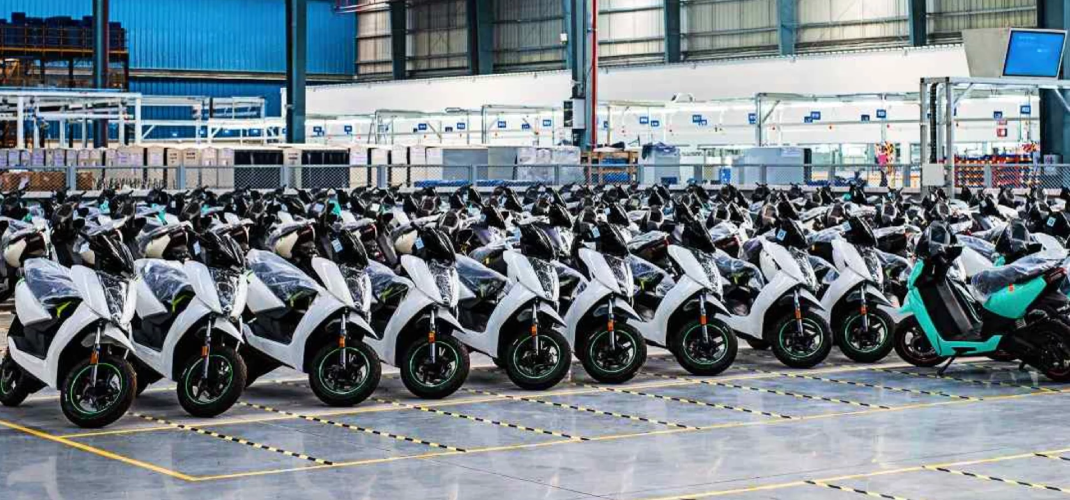
India is at the threshold of the clean energy revolution. With rapid urbanisation, increasing pollution levels, and a worldwide shift to sustainable mobility, the need for Electric Vehicle Technology has never felt as urgent as it does now. The accelerating transformation in this respect presents enormous opportunities for engineers, innovators, and technologists — those professionals who will steer the nation's journey toward a cleaner, greener future.
Now, with a view to addressing this demand, CCentric Learning offers a range of specialised programs such as B.Tech. in Electric Vehicle Technology (EVT) and B.Tech. in Hydrogen Fuel Cell Technology (HFCT). The curricula of such programs have an industry-aligned structure oriented toward the changing world of green transportation.
Those who seek to understand the value and usefulness of sociology realise that, in discovering these cultural narratives, the cultural consumer is in a better position to approach media representations critically.
India has some of the most polluted air in the world, primarily due to vehicle emissions. Electric vehicle technology has the potential to drastically reduce greenhouse gas emissions and harmful pollutants such as PM2.5 and NOx, thereby contributing to cleaner air and healthier cities.
This has made the adoption of EVs not only an economic necessity but also an environmental one.
India currently imports nearly 85% of its crude oil, making it highly vulnerable to global price fluctuations. Switching over to electric and hydrogen-powered transport reduces this dependence by fostering the use of renewable and domestically produced energy.
Through the B.Tech.-EVT and B.Tech.-HFCT courses offered at CCentric Learning, students understand how Clean Energy Technologies can redefine India's energy independence and sustainability goals.
According to NITI Aayog, India's electric mobility sector is expected to generate more than 10 million jobs by 2030. New opportunities are arising in areas like battery manufacturing, EV system design, hydrogen applications, and charging infrastructure.
CCentric Learning’s industry-driven programs provide hands-on exposure to the latest EV and hydrogen technologies — placing students at the heart of one of the fastest-growing industries of this decade.
EVs produce zero tailpipe emissions, directly improving air quality and contributing to urban sustainability.
Electric vehicles have lower operational and maintenance costs than traditional vehicles, making them ideal for India’s cost-conscious market.
Students at CCentric Learning explore technologies like battery management systems, regenerative braking, and hydrogen fuel cells — driving innovation forward.
Adoption of EVs and hydrogen systems reduces reliance on imported oil and strengthens renewable energy integration for long-term resilience.
With major manufacturers like Tata Motors, Mahindra, Hyundai, and Ola Electric expanding EV portfolios, the demand for skilled engineers is rising — highlighting the relevance of CCentric’s EVT and HFCT programs.
CCentric Learning bridges the gap between classroom knowledge and industry needs through experiential, project-based education in B.Tech. EVT and B.Tech. HFCT.
We’re not just teaching electric mobility — we power the movement. Our programs combine mentorship, global partnerships, and innovation-driven learning to develop leaders in EV and hydrogen technologies.
The shift to electric and hydrogen-powered mobility is transforming India’s technological and economic landscape. CCentric Learning equips future engineers through its EVT and HFCT programs with practical, industry-aligned education, and global exposure — essential ingredients to drive India’s sustainable future.
For students passionate about technology, sustainability, and innovation — CCentric Learning is where your electric future begins.
Stay ahead with the latest updates, insights, and events from Ccentric